

Titanium Helix Piercing
You will love our beautiful Titanium Helix Piercing collection, offering various motifs where a part of the models is made of titanium. Our assortment includes over 860 models for you in elegant colors like silver, gold, rose gold, and black. For every other style, browse our Helix Piercing category. Pick your favourite now!
- 100-day return policy
- Shipped from Germany
- Tested materials
Titanium Helix Piercing: over 900 labrets, push-in studs and clickers made of implant-grade titanium in silver, gold and black. Discover them now!





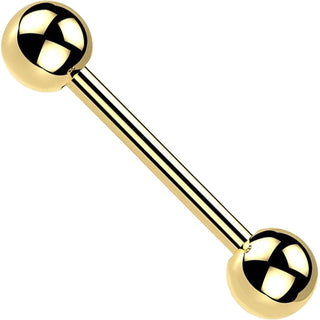


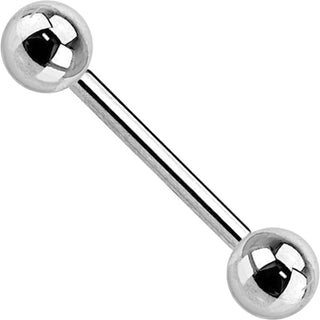


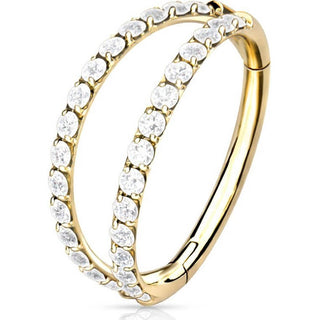


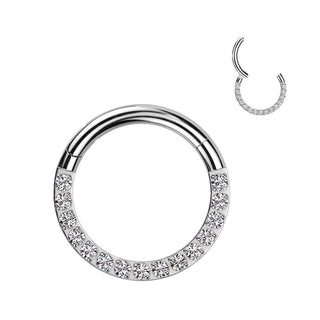


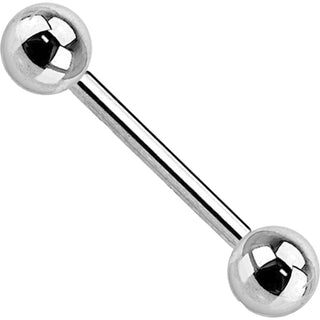


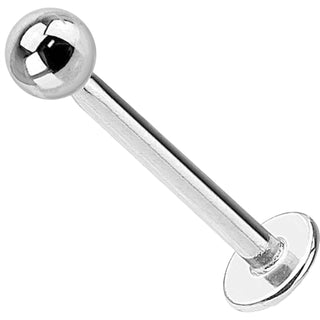

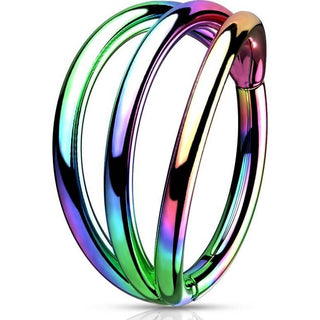


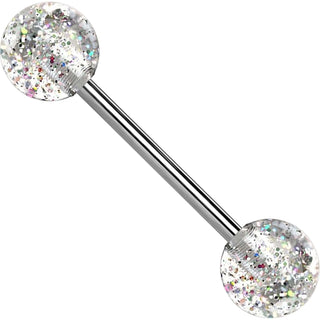


Titanium Helix Piercing: Studs and Rings made of Implant-Grade Titanium
A Titanium Helix Piercing is lighter, making it wonderfully comfortable to wear on your ear rim.
For your Titanium Helix Piercing, you will find over 900 models in our shop, and every single one is made entirely of titanium. About two-thirds are labrets with a flat back, complemented by clicker rings, uniquely shaped rings, and straight barbells. The selection ranges from simple balls, hearts, and opals to attachments with cubic zirconia, available in silver, gold, rose gold, and black. Prices start at €4.99. All other shapes and materials for your ear rim can be found in our Helix Piercing overview.
Titanium Helix Piercing at PiercingXXL: our selection
Discover our selection of over 860 models for your titanium helix piercing, where a part of the collection is made of titanium in silver, gold, rose gold, or black. You can choose between a flat back labret, internal thread, a hinged clicker ring, a threadless push-in, or a style with a movable pendant. Complete your look with zirconia or crystal stones in a crystal color.

Why choose titanium for your helix?
Our titanium complies with the ASTM F136 standard, which is the same implant-grade titanium used in medical procedures. It is nickel-free, lightweight, and highly biocompatible. That is why a Titanium Helix Piercing is the safest choice for sensitive skin and for your first jewelry change when the cartilage is still healing. The gold, rose gold, and black models feature a PVD coating over a solid titanium core, meaning only the surface is colored. You can find more titanium jewelry for other ear placements under Titanium Ear Piercing.

Labret, Push-In or Clicker
Most labrets feature an internal thread: the attachment is screwed into the bar, ensuring no rough threads pass through your piercing hole. With push-in (threadless) models, you simply insert the attachment's slightly bent pin into the hollow bar, and the tension holds it securely in place. This allows you to change tops quickly without removing the bar itself. You can find a large selection of this closure type under Push-In Piercing.
If you prefer wearing rings, a titanium clicker is the way to go. It opens on a hinge and clicks securely into place when closed. Rings are usually worn in a helix only after the piercing has fully healed; before that, studs are much more comfortable. All studs for the ear rim can also be found under Helix Piercing Studs.
Thicknesses and lengths
Almost all Titanium Helix Piercing models are available in a 1.2 mm thickness, with many also offered in 1.0 mm and 1.6 mm. We carry labrets in bar lengths of 6 mm, 8 mm, and 10 mm, with some available in 12 mm. As a general guide: a healed helix usually requires 6 mm or 8 mm, while a fresh or swollen piercing needs 8 mm to 10 mm. For rings, inner diameters of 8 mm and 10 mm are the most common.
Our practical advice
For your Titanium Helix Piercing, we recommend starting with a simple 1.2 mm thick labret bar in the appropriate length, so you only need to swap out the attachments later. This is fastest and easiest with push-in jewelry. You should only plan to switch to a titanium clicker ring once the cartilage has completely settled and is no longer prone to swelling.
Frequently asked questions about Titanium Helix Piercings
Is titanium better than surgical steel?
ASTM F136 titanium is completely nickel-free, whereas 316L surgical steel contains trace amounts of nickel. For sensitive skin and fresh helix piercings, titanium is therefore the superior choice. Titanium is also lighter, which makes it very comfortable to wear on the ear rim.
Does gold-colored titanium fade over time?
The PVD coating is highly durable and lasts a long time with normal care. However, frequent friction, such as from brushing your hair, can cause it to wear down slightly on the edges over time. The solid titanium underneath remains intact, so the jewelry's biocompatibility is never compromised.
What bar length do I need for my helix piercing?
This depends on the thickness of your ear cartilage. Usually, 6 mm or 8 mm is perfect if you want the stud to sit flush against the skin. If your stud is too long and keeps getting caught, your piercer can downsize it to a shorter bar once the swelling has subsided.
Do push-in tops fit on every bar?
Push-in tops fit on threadless push-in bars of the corresponding pin thickness. They will not fit on internally threaded bars; for those, you need threaded attachments. Always check the closure type when buying replacement parts.
Can I sleep with a titanium stud?
A flat back titanium labret is generally very comfortable and barely noticeable while sleeping. However, during the healing process, you should try to avoid sleeping on the pierced side to prevent putting pressure on the cartilage.

 HelixRookDaithTragusConchLobe
Where is the helix piercing located?
The helix is located in the cartilage at the upper edge of the ear. Multiple helix piercings stacked together create a beautiful ear stack.
How your helix piercing heals
Clean twice a day with sterile saline solution. Try not to sleep on the pierced side if possible.
Do not change the initial jewelry; be careful when putting hair, headphones, and hats over it.
Cartilage piercings take time: A helix usually takes six to twelve months to heal.
Once everything is calm, you can insert new jewelry – in the same gauge as before.
These times are guidelines; every healing process is different. In case of severe pain, swelling, or pus, please consult your piercing studio or a doctor.