Heart Helix Piercings
We are happy to present you our beautiful collection of Heart Helix Piercings, featuring over 90 lovely models for your personal style. You can choose from a wonderful variety of motifs in silver, gold, rose gold, or black, with some pieces crafted from titanium. For every other style, browse our Helix Piercing category. Pick your favourite now!
- 100-day return policy
- Shipped from Germany
- Tested materials
Discover helix piercings with a heart motif made of titanium or gold – delicate, symbolic, and ideal for your ear cartilage.












Heart Helix Piercings – Delicate Ear Jewellery with Meaning
Heart Helix Piercings look amazing when you mix and match them along the edge of your ear.
What should your next ear piercing look like – simply round or featuring a small symbol that immediately catches the eye?
A helix piercing with a heart motif sits in the upper ear cartilage, bearing a tiny, delicate symbol that makes a strong impact precisely because of the small surface area. Every detail of the jewellery counts, from the shine of the metal to the shape of the heart, which is exactly why it is worth taking a close look at the material, closure, and size before making your choice. The ear cartilage also offers space for several piercings at the same time. A second or third piercing along the cartilage fold is not uncommon and can be easily combined.
Heart Helix Piercings at PiercingXXL: our selection
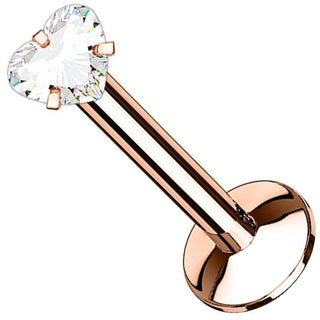
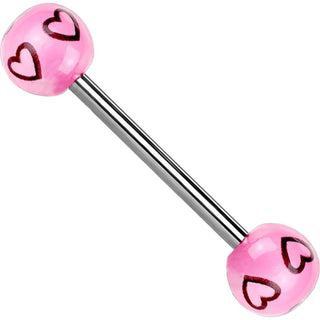
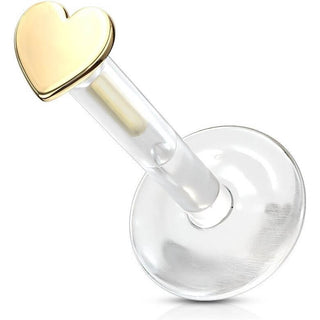
Discover over 90 models of heart helix piercings in metal colors like silver, gold, rose gold, or black, including some pieces crafted from titanium. You can choose sparkling zirconia stones in shades of crystal, pink, or rainbow AB. Select your favorite style from flat back labrets, internal threads, hinged clicker rings, threadless push-in designs, bendable rings, or pieces with a movable dangle.

Mid Helix, Low Helix, and Double Helix in Comparison
A mid helix sits centrally on the upper edge of the ear, a low helix closer to the earlobe, and a double helix combines two piercings one above the other. A special form is the Eskimo Piercing, where a bar runs through the cartilage fold and remains visible from both the front and the back. If you prefer the classic variant, you will find the right basic shapes for each of these positions in the Helix Piercing collection.

Material and Jewellery Selection for Your Heart Helix Piercing
Titanium is considered the standard for freshly pierced ears because it rarely causes skin irritation and is easy to clean. A Titanium Barbell Piercing with a heart pendant is therefore particularly suitable for the initial phase. Once healed, it can become more decorative: A Helix Piercing with a heart element looks highly polished and remains colour-stable in the long term, provided the alloy is right.
Piercing Process, Pain Level, and Healing Process
A helix piercing goes through cartilage tissue, which reacts more sensitively than the soft earlobe. The piercing itself only takes seconds, but the throbbing afterwards usually lasts a bit longer than with soft tissue piercings. Cartilage generally heals slower than lobes – patience and consistent care with sterile saline solution are more important here than with any other ear piercing. If you change the jewellery before it has fully healed, you risk irritation and unnecessarily prolong the process.
Alternatives and Matching Ear Jewellery
Not every ear is equally suited for the classic helix position. If you prefer the front cartilage fold, you will find a more subtle alternative with a similarly small jewellery surface in the Forward Helix Piercing. For multiple piercings along the outer edge of the ear, it is also worth taking a look at Ear Crawler Piercing jewellery, which visually traces the entire edge of the ear and can be combined beautifully with a heart helix.
Our Recommendation
If you are choosing a heart helix piercing for the first time, you should opt for titanium and give your ear time – cartilage tissue does not forgive impatience. Only after complete healing is it worth switching to gold or adding a second position like a double helix or forward helix. This way, the little heart on your ear remains exactly what it should be: a permanent, well-tolerated detail instead of a recurring problem.
Frequently Asked Questions About Heart Helix Piercings
What is a helix piercing?
A helix piercing sits in the upper cartilage area of the outer ear. It is one of the most popular cartilage piercings because many positions and jewellery variants can be combined there – from a simple ring to a barbell with a heart pendant.
Does a helix piercing hurt?
The piercing causes a short, sharp pain as the cartilage tissue is penetrated. The sensation varies from person to person but is generally considered more intense than an earlobe piercing.
How long does a helix piercing take to heal?
Cartilage piercings take significantly longer than soft tissue piercings because the blood circulation in the cartilage is lower. Consistent care with a sterile solution and avoiding early jewellery changes noticeably speed up the process.
What is the difference between a mid helix, low helix, and double helix?
The terms describe the position on the ear cartilage: mid helix in the middle, low helix closer to the lobe, double helix two piercings one above the other. All three variants can be styled with a heart motif.
Which material is best for a heart helix piercing?
Titanium is the most tolerable choice for the initial jewellery, as it rarely causes irritation. Once healing is complete, you can switch to gold if a more premium look is desired.

 HelixRookDaithTragusConchLobe
Where is the helix piercing located?
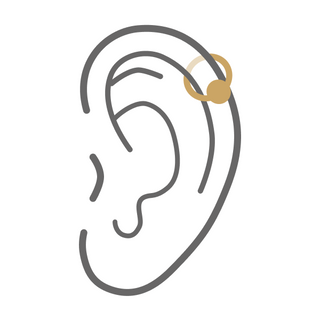
The helix is located in the cartilage at the upper edge of the ear. Multiple helix piercings stacked together create a beautiful ear stack.
How your helix piercing heals
Clean twice a day with sterile saline solution. Try not to sleep on the pierced side if possible.
Do not change the initial jewelry; be careful when putting hair, headphones, and hats over it.
Cartilage piercings take time: A helix usually takes six to twelve months to heal.
Once everything is calm, you can insert new jewelry – in the same gauge as before.
These times are guidelines; every healing process is different. In case of severe pain, swelling, or pus, please consult your piercing studio or a doctor.